While more-than-human beings adapt to ecological changes like earlier springs by adjusting their rhythms and behaviors, Melanie Challenger asks, can we learn from them how to bring our bodies into a more direct conversation with the seasons?
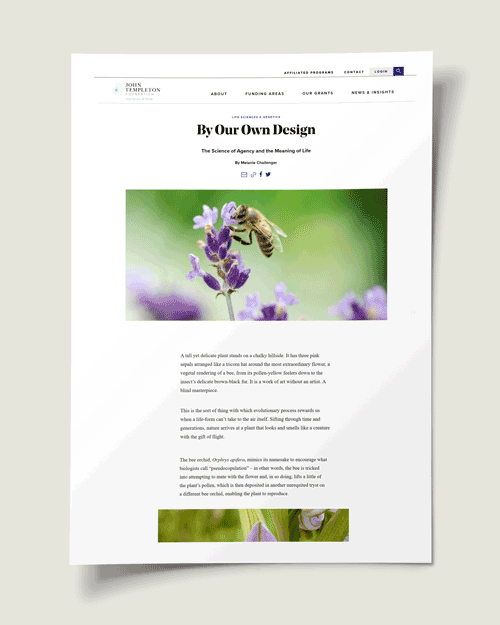
“A tall yet delicate plant stands on a chalky hillside. It has three pink sepals arranged like a tricorn hat around the most extraordinary flower, a vegetal rendering of a bee, from its pollen-yellow feelers down to the insect’s delicate brown-black fur. It is a work of art without an artist. A blind masterpiece. This is the sort of thing… ”
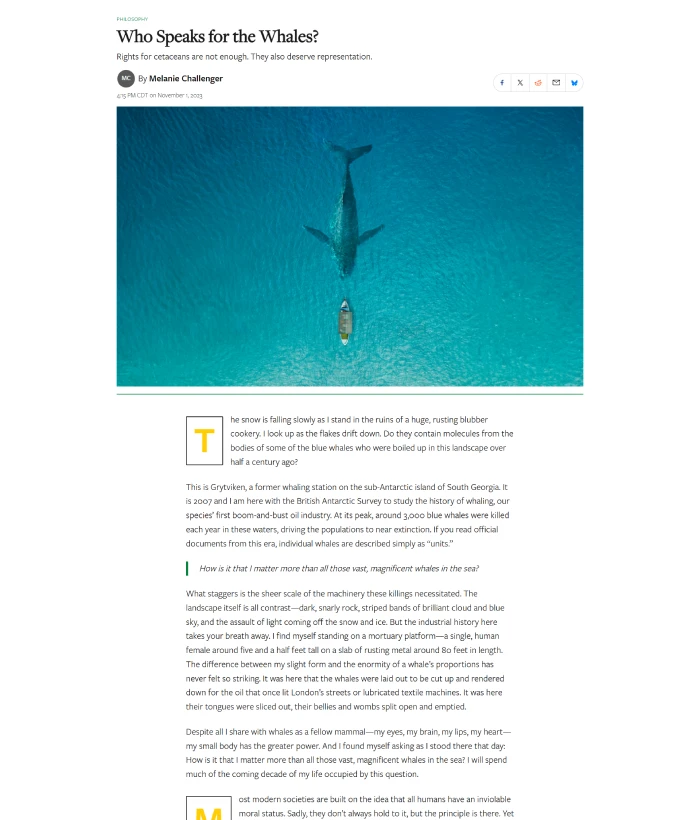
The snow is falling slowly as I stand in the ruins of a huge, rusting blubber cookery. I look up as the flakes drift down. Do they contain molecules from the bodies of some of the blue whales who were boiled up in this landscape over half a century ago?
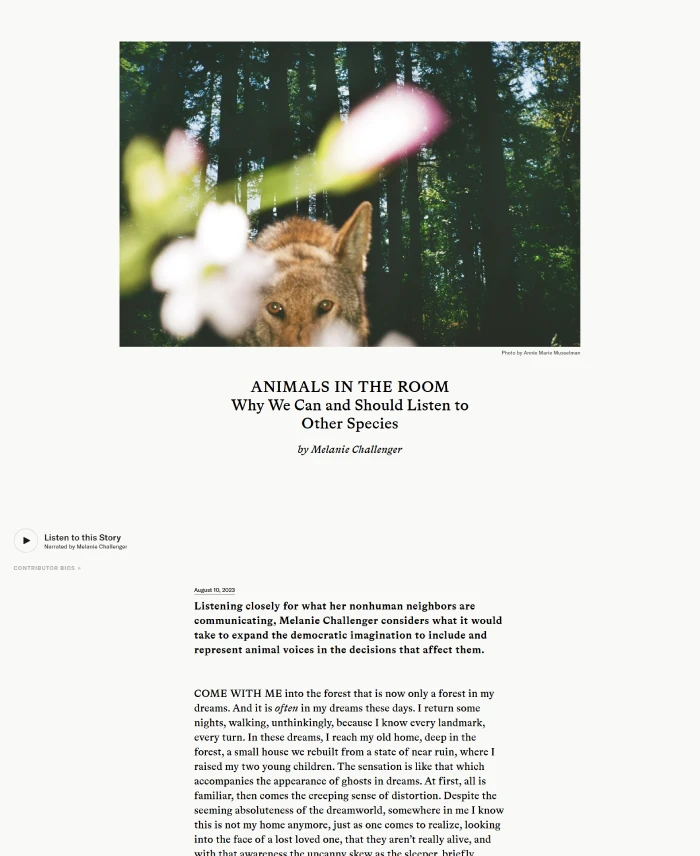
Listening closely for what her nonhuman neighbors are communicating, Melanie Challenger considers what it would take to expand the democratic imagination to include and represent animal voices in the decisions that affect them.
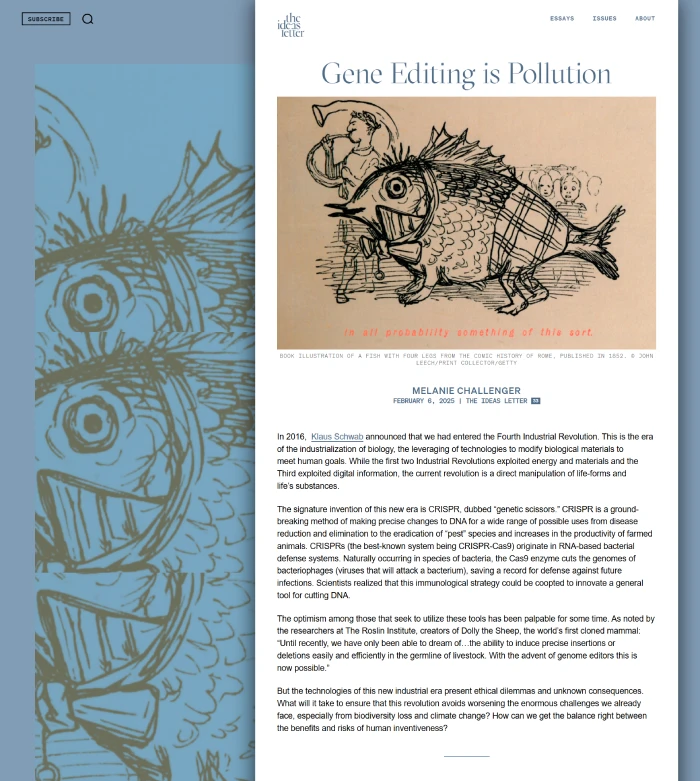
In 2016, Klaus Schwab announced that we had entered the Fourth Industrial Revolution. This is the era of the industrialization of biology, the leveraging of technologies to modify biological materials to meet human goals. While the first two Industrial Revolutions exploited energy and materials and the Third exploited digital information, the current revolution is a direct manipulation of life-forms and life’s substances.
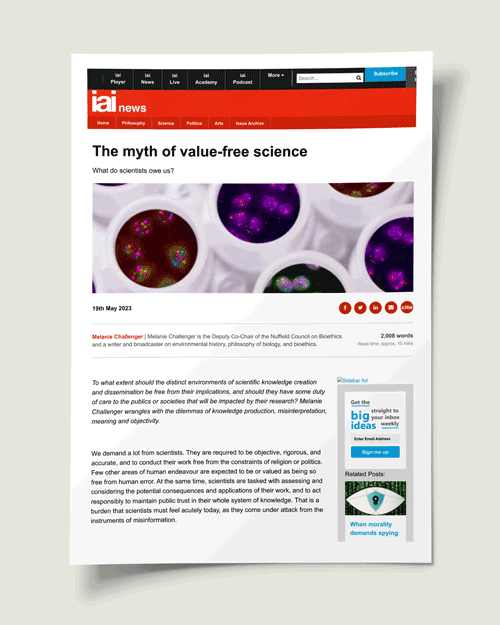
“To what extent should the distinct environments of scientific knowledge creation and dissemination be free from their implications, and should they have some duty of care to the publics or societies that will be impacted by their research? Melanie Challenger wrangles with the dilemmas of knowledge production, misinterpretation, meaning and objectivity.”
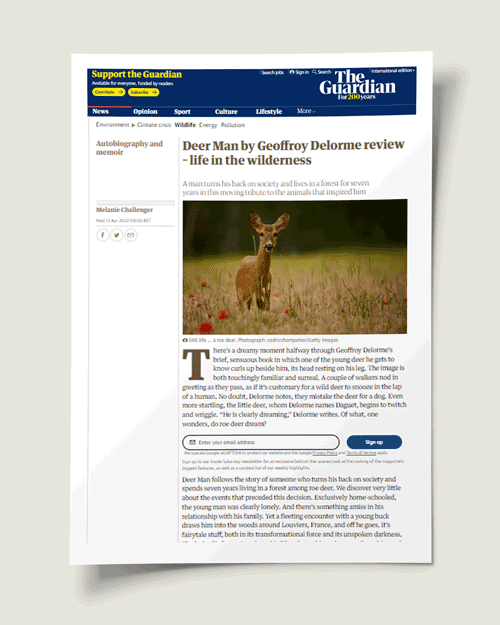
A man turns his back on society and lives in a forest for seven years in this moving tribute to the animals that inspired him
“Deer Man follows the story of someone who turns his back on society and spends seven years living in a forest among roe deer. […] a fleeting encounter with a young buck draws him into the woods around Louviers, France, and off he goes. It’s fairytale stuff, both in its transformational force and its unspoken darkness. The lack of information about his life – the ruthless absence of autobiography – can seem odd to a modern reader. Yet the strength of this book is its singular focus on the deer.”
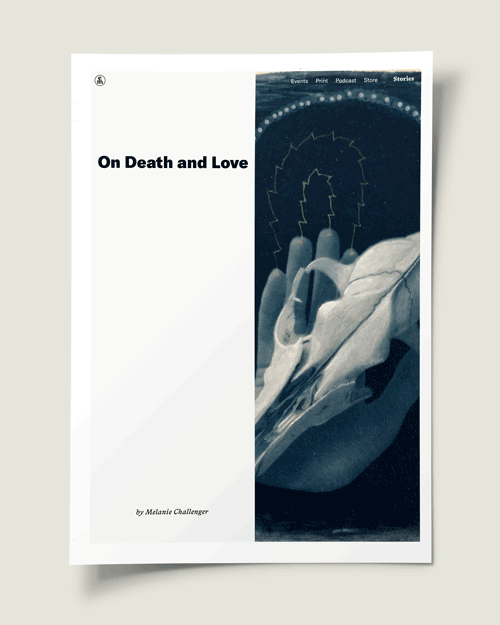
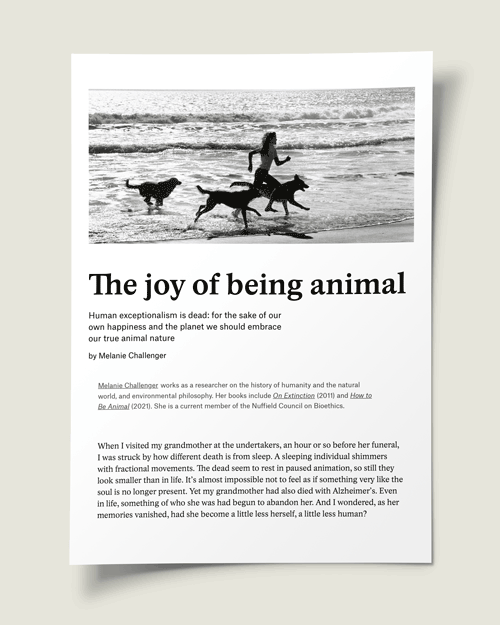
As Melanie Challenger examines the belief in human exceptionalism that has devastated life on this planet, she wonders if our desire to outrun death is hindering our capacity to love
“I met Death in my early twenties. I had already lost loved ones before this time. A friend at school was taken by leukemia in a breathtaking six weeks one strange, hot summer. My grandfather, Eric, and my uncle, Tim, both died before their time.”
A 2021 long essay on human exceptionalism and the importance of accepting that we’re animals
“When I visited my grandmother at the undertakers, an hour or so before her funeral, I was struck by how different death is from sleep. A sleeping individual shimmers with fractional movements. The dead seem to rest in paused animation, so still they look smaller than in life. It’s almost impossible not to feel as if something very like the soul is no longer present.”